Complete Bougainvillea Care Guide for Indian Gardens
Grow a garden full of colour with Bagan Bilash.
Bougainvillea—known in Bengali as Bagan Bilash (বাগান বিলাস)—is loved for its brilliant colour, vigorous growth and ability to brighten terraces, balconies and gardens. This practical guide brings together the growing advice we have learned through hands-on nursery experience.
Learn how to choose a variety, prepare the soil, provide sunlight, water correctly, feed and prune your plant, and solve common growing problems. The advice is a starting point: adjust care to your plant, pot, season and local weather.
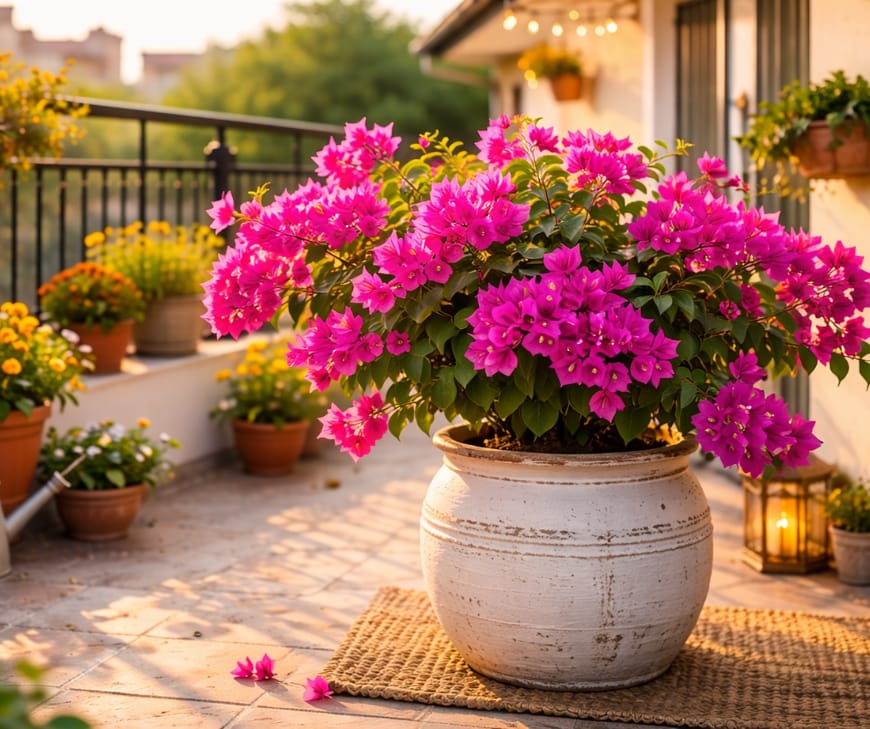
What Is Bougainvillea?
Bougainvillea is a woody, often thorny shrub or climbing plant native to South America. It is named after French explorer Louis Antoine de Bougainville. The vivid pink, purple, red, orange, white or yellow parts commonly called its “flowers” are colourful bracts surrounding the plant’s small true flowers.
In Bengali, bougainvillea is affectionately called Bagan Bilash. A popular story associates this name with Rabindranath Tagore, but the attribution is not firmly verified and should be treated as a traditional anecdote rather than established history.
Why Grow Bougainvillea in Indian Gardens?
Bougainvillea is well suited to many warm Indian growing conditions when it receives plenty of direct sunlight and has well-drained soil. It can be trained as a shrub, climber, hedge or container plant, making it useful for gardens, terraces and sunny balconies.
- It offers colourful bracts in a wide range of shades.
- It can be trained to suit different garden spaces.
- Established plants can tolerate periods of dry weather better than constantly wet soil.
- Many varieties flower in repeated flushes when growing conditions are suitable.
Different Types of Bougainvillea
Bougainvillea varieties differ in colour, bract form, foliage, growth habit, vigour and suitability for pots or open ground. You may come across single-bracted, double-flowered, compact, climbing and variegated foliage types.
Popular colour and growth forms
- Pink and magenta: classic, vibrant garden colours.
- White and cream: softer shades that stand out against green foliage.
- Orange, red and yellow: warm colours for bright garden displays.
- Variegated foliage: leaves with contrasting green, cream or yellow patterns.
- Compact and dwarf forms: useful where space is limited, depending on the variety.
Always check the specific variety’s growth habit before choosing a plant. A vigorous climber may need more room and support than a compact selection.
Bougainvillea Care at a Glance
| Care factor | Recommended starting point | What to watch for |
|---|---|---|
| Sunlight | Aim for at least 5–6 hours of direct sun daily; more bright sun often supports better flowering. | Too much shade can produce leafy growth with fewer blooms. |
| Watering | Water thoroughly when the upper layer of potting mix has dried. Let excess water drain away. | Constantly wet soil can damage roots. Do not leave the pot standing in water. |
| Temperature | Warm outdoor conditions generally suit bougainvillea. Protect plants from cold snaps and frost. | Growth may slow and leaves may drop in cold conditions. |
| Airflow | Allow air to circulate around the foliage. | In humid monsoon weather, avoid overwatering and overcrowding. |
| Soil | Use a loose, airy, well-draining potting mix with some mature compost. | Heavy, compacted or waterlogged mix is unsuitable. |
| Fertilizer | Use a suitable balanced or flowering-plant fertilizer according to its label during active growth. | Excess nitrogen may encourage leaves at the expense of flowers. |
| Pruning | Lightly shape after a flowering flush; pinch soft tips when appropriate to encourage branching. | Use clean, sharp tools and wear gloves because stems may have thorns. |
Watering frequency is not fixed. It changes with heat, rainfall, wind, pot material, plant size and drainage. Check the soil before watering rather than following a rigid daily schedule.
How to Grow Bougainvillea at Home
Choose a sunny position first, then select a pot or garden bed with good drainage. Handle the root ball gently during planting and avoid burying the stem deeper than it was growing before.
- Select a healthy plant suited to your available space and preferred growth habit.
- Choose a sturdy container with open drainage holes, or prepare a free-draining garden bed.
- Use an airy potting mix and position the plant at the same soil level as it was in its original container.
- Water once after planting to settle the mix, then allow the surface layer to dry before watering again.
- Keep the plant in a bright position and avoid heavy feeding while it is recovering from transplanting.
Best Soil Mix for Bougainvillea
Bougainvillea roots need air as well as moisture. Use a loose, free-draining base mix and add a modest amount of mature organic matter. As a practical starting point by volume, try:
60% Base mix
Loose sandy loam or a quality potting mix that drains freely.
30% Mature organic matter
Fully decomposed leaf compost or mature compost.
Up to 10% amendment
Use a suitable, measured amendment only when needed; do not combine several concentrated fertilizers by default.
These proportions are a starting formula, not a fixed requirement for every climate or pot. Use only mature, stable compost. Fresh manure and excessive fertilizer can injure roots.
Sunlight and Watering Requirements

How much sunlight does bougainvillea need?
Aim for at least 5–6 hours of direct sunlight daily. A bright outdoor position generally supports stronger flowering than a shady spot. Introduce a plant gradually to stronger sunlight if it has been kept in shade, to reduce the risk of leaf scorch.
How often should you water bougainvillea?
Water the root zone thoroughly, then allow excess water to escape. Before watering again, check the upper layer of the potting mix. During hot, dry weather, check pots more often; during monsoon or cooler periods, watering may be needed much less frequently.
Watering during summer, monsoon and winter
- Summer: Check the pot more frequently because heat and wind can dry the mix quickly.
- Monsoon: Protect pots from prolonged waterlogging and reduce watering when rainfall keeps the mix moist.
- Winter: Growth may slow, so check the soil before watering and avoid keeping it constantly wet.
Some growers slightly reduce watering to encourage flowering, but do not deliberately wilt or severely dry out the plant. Aim for thorough watering followed by partial drying.
Best Fertilizer for Bougainvillea Flowering
Feed according to the plant’s growth, the condition of the potting mix and the fertilizer label. A balanced or flowering-plant fertilizer can be used during active growth. Avoid applying several strong fertilizers or supplements together.
Which nutrients help bougainvillea?
Plants need a balanced supply of essential nutrients. Excess nitrogen can encourage leafy growth at the expense of flowering, so avoid overfeeding with high-nitrogen products. Follow the product label rather than guessing a concentrated dose.
Organic fertilizers and supplements
Mature compost and other soil amendments may be used where suitable. Bone meal, neem cake, mustard cake and mineral supplements vary in strength and composition. Use products only as directed, and do not combine multiple concentrated amendments without a clear reason.
Should you use Epsom salt?
Do not use Epsom salt as a routine flowering treatment. It supplies magnesium, but it is useful only when a magnesium deficiency is suspected or a qualified local adviser recommends it.
How to Prune Bougainvillea for More Flowers
Pruning helps maintain shape, control size and encourage branching. Bougainvillea often produces new growth from which later flowering shoots develop, so avoid removing too much healthy growth at once.
When should you prune?
Lightly shape the plant after a flowering flush. Major pruning is generally best timed around the end of flowering or before strong new growth, depending on the local season and variety.
How to prune safely
- Use clean, sharp pruning shears.
- Remove dead, damaged or crossing stems first.
- Trim long shoots to maintain the desired shape.
- Pinch soft growing tips when appropriate to encourage branching.
- Wear gloves and keep thorny stems away from your face and hands.
How to Grow Bougainvillea in Pots and on Balconies
Bougainvillea can grow well in containers when the pot has good drainage and the plant receives enough direct sunlight. Choose a sturdy pot that suits the plant’s current root ball and growth habit. A pot that is far too large can hold excess moisture for longer.
- Use a container with open drainage holes.
- Choose a pot only modestly larger when repotting.
- Use a free-draining mix rather than heavy garden soil alone.
- Provide a trellis or support for climbing varieties.
- Position the pot where it receives several hours of direct sun.
- Keep thorny branches away from walkways and seating areas.
When should you repot?
Repot when the plant has outgrown its container or the potting mix has broken down. Choose a suitable time when conditions support active recovery, handle the root ball gently and avoid moving it into an unnecessarily large pot.
Why Is My Bougainvillea Not Flowering?
If your plant is producing plenty of leaves but very few colourful bracts, check its growing conditions before adding more fertilizer. Several factors can reduce flowering.
Not enough direct sunlight
Move the plant gradually to a brighter outdoor position where it can receive several hours of direct sun.
Too much water
Check whether the mix stays wet for too long. Improve drainage and water only when the upper layer has dried.
Excess nitrogen
Review your feeding routine. Too much nitrogen can encourage leafy growth rather than flowering.
Heavy or poorly timed pruning
Allow fresh growth to develop and avoid repeatedly cutting back all new shoots.
Recently planted or repotted
A plant may need time to establish its roots before flowering strongly again.
Plant variety and maturity
Flowering habits differ between varieties and plants at different stages of growth.
Common Bougainvillea Problems and Their Solutions
Yellowing leaves
Check soil moisture and drainage before adding water or fertilizer. Both waterlogging and severe dryness can cause stress.
Leaf drop
Consider recent changes in light, watering, temperature or location. Keep care consistent while the plant adjusts.
Wilting
Check the soil before watering. Wilting can result from dry roots or damaged roots in waterlogged soil.
Aphids and mealybugs
Inspect shoot tips and leaf undersides. Remove small infestations where practical and use only a plant-safe treatment according to its label.
Whiteflies and mites
Look for tiny insects, stippling or fine webbing. Isolate badly affected plants where possible and follow the treatment label.
Root rot risk
Persistent wet soil and poor drainage increase risk. Ensure drainage holes are open and allow the mix to partially dry between waterings.
Identify the problem before applying pesticides or other treatments. Always follow the product label, use protective equipment where directed and keep treatments away from children and pets.
Bougainvillea Seasonal Care Calendar for India
| Season | Care focus | What to avoid |
|---|---|---|
| Summer | Check container moisture more often, maintain good airflow and keep the plant in a sunny position. | Do not let small pots become severely dry, and avoid watering on a fixed schedule without checking soil. |
| Monsoon | Keep drainage holes clear, protect pots from prolonged heavy rain where needed and inspect foliage. | Avoid waterlogged soil and unnecessary extra watering. |
| Autumn | Review plant shape, remove dead growth and maintain appropriate sunlight and feeding. | Avoid heavy pruning that removes too much healthy growth. |
| Winter | Water according to soil dryness and protect plants from unusually cold conditions. | Avoid keeping the potting mix constantly wet or forcing growth with excess fertilizer. |
India has varied regional climates. Use this as a seasonal guide and adjust it for your local temperature, rainfall and growing conditions.
How to Choose the Right Bougainvillea Variety
Choose a plant based on the space you have, the colour and flower form you like, and whether you want a compact shrub or a vigorous climber. Check the variety description for mature size and growth habit before ordering.
Rooted or grafted bougainvillea?
Rooted and grafted plants are different ways of producing and presenting bougainvillea. Your choice should depend on the variety, plant size, intended use and the product details provided. Read each listing carefully for the exact plant supplied.
Explore Bougainvillea plants at Go Green
Discover different colours, foliage patterns and growth habits in our Bougainvillea collection. Check each product page for variety details, plant type and availability.
Explore Bougainvillea PlantsFrequently Asked Questions About Bougainvillea
How many hours of sunlight does bougainvillea need?
Aim for at least 5–6 hours of direct sunlight each day. A brighter outdoor position generally supports stronger flowering than a shady one.
How often should I water my bougainvillea in a pot?
There is no universal number of days. Water thoroughly when the upper layer of the potting mix has dried, and allow excess water to drain. Check more often in hot weather and less often during rain or cooler weather.
What kind of soil is best for bougainvillea?
Use a light, airy, well-draining mix. Sandy loam or a quality potting mix with mature compost can work well, provided water does not remain trapped around the roots.
Why is my bougainvillea growing leaves but not flowering?
Common reasons include insufficient direct sunlight, excess nitrogen, heavy pruning at the wrong time, or a plant that is still establishing itself. Check the light first and keep feeding balanced and moderate.
When should I prune bougainvillea?
Lightly shape the plant after a flowering flush. Major pruning is usually best done around the end of flowering or just before strong new growth. Timing depends on your local climate and the plant’s flowering cycle.
Can I grow bougainvillea in a pot or on a balcony?
Yes. Use a sturdy pot with open drainage holes and place it where it receives several hours of direct sun. Provide support if the variety grows as a climber, and take care around thorny stems.
Which fertilizer is best for bougainvillea?
Use a suitable balanced or flowering-plant fertilizer during active growth and follow the label. Avoid excess nitrogen and do not combine several concentrated fertilizers without a clear reason.
Should I spray Epsom salt after the flowers fade?
Not routinely. Epsom salt supplies magnesium, but it is not a universal flowering treatment. Use it only when magnesium deficiency is suspected or based on suitable local advice.
Is it necessary to put gravel at the bottom of the pot?
No. The important things are an unobstructed drainage hole and a well-draining mix throughout the pot. You can use a small piece of mesh to prevent mix from escaping, but avoid blocking the hole.
Can bougainvillea grow in the rainy season?
Yes, but protect container plants from prolonged waterlogging. Keep drainage holes clear and water only when the mix needs it.
Why are my bougainvillea leaves turning yellow?
Yellow leaves can have several causes, including overwatering, poor drainage, underwatering or environmental stress. Check the soil and roots before applying fertilizer or treatment.
Can I prune bougainvillea heavily?
Established plants can tolerate pruning, but avoid removing too much healthy growth at once. Use clean tools, wear gloves and time major pruning around the plant’s growth and flowering cycle.
Grow Your Own Bagan Bilash with Go Green
With plenty of sunshine, good drainage, thoughtful watering and careful pruning, bougainvillea can bring lasting colour to a garden, terrace or balcony. Every plant and growing space is different, so observe your plant and adjust care with the seasons.
Explore the Go Green collection to find a bougainvillea variety that suits your garden and growing space.
Shop Bougainvillea Collection