Bougainvillea Care Guide
Grow a garden full of colour with Bagan Bilash.
Since childhood, I have loved plants and enjoyed growing them. Among all the plants I grow, bougainvillea—known in Bengali as Bagan Bilash (বাগান বিলাস)—has a special place in my heart. Over the years, I have learned through hands-on experience how to care for this beautiful flowering plant. I am sharing those lessons here to help fellow plant lovers grow healthy plants and enjoy colourful blooms.
This guide covers sunlight, watering, soil preparation, feeding, pruning, drainage and common problems. Conditions vary with the season, pot size and local weather, so use the guidance as a starting point and observe your plant.
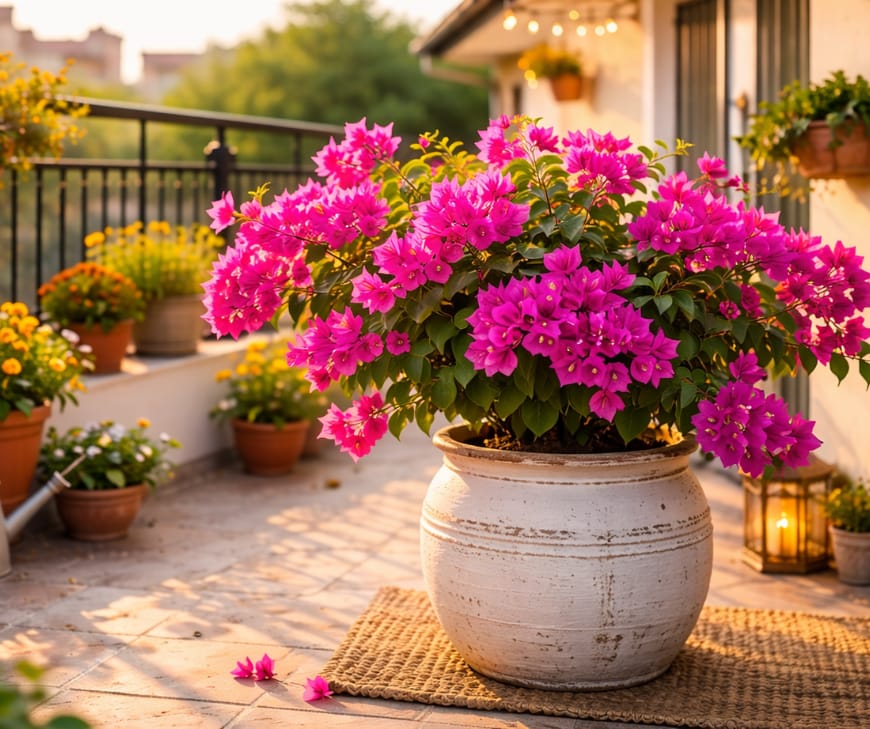
Meet the Bougainvillea
Bougainvillea is a woody, often thorny shrub or climbing plant native to South America. It is named after French explorer Louis Antoine de Bougainville. The vivid pink, purple, red, orange, white or yellow parts commonly called its “flowers” are colourful bracts surrounding the plant’s small true flowers.
In Bengali, bougainvillea is affectionately called Bagan Bilash. A popular story associates this name with Rabindranath Tagore, though the attribution is not firmly verified; it is best treated as a traditional anecdote rather than established history.
Bougainvillea Care at a Glance
| Care factor | Recommended starting point | What to watch for |
|---|---|---|
| Sunlight | At least 5–6 hours of direct sun daily; more bright sun often encourages better flowering. | Too much shade can produce leafy growth with fewer blooms. |
| Watering | Water thoroughly when the upper layer of potting mix has dried. Let excess water drain away. | Constantly wet soil can damage roots. Do not leave the pot standing in water. |
| Temperature | Warm outdoor conditions suit bougainvillea. Protect plants from cold snaps and frost. | Growth may slow and leaves may drop in cold conditions. |
| Humidity / airflow | Normal outdoor humidity is usually fine; ensure good airflow around the foliage. | In humid monsoon weather, be especially careful not to overwater. |
| Soil | Loose, airy, well-draining potting mix with some mature compost. | Heavy, compacted or waterlogged mix is unsuitable. |
| Fertiliser | Use a balanced or flowering-plant fertiliser according to its label during active growth. | Excess nitrogen may encourage leaves at the expense of flowers. Avoid piling multiple concentrated fertilisers together. |
| Pruning | Prune to shape after a flowering flush or before strong new growth; pinch soft tips for branching. | Wear gloves and use clean, sharp tools—the stems may have thorns. |
Watering frequency is not fixed: it changes with heat, rainfall, wind, pot material, plant size and drainage. Check the soil before watering instead of following a rigid daily schedule.
1. Prepare a Well-Draining Potting Mix
Bougainvillea roots need air as well as moisture. The original gardening method shared here uses a mix of soil, organic matter and other amendments. For a safer, easier-to-adjust mix, start with these approximate proportions by volume:
60% Base mix
Loose sandy loam or quality potting mix that drains freely.
30% Mature organic matter
Fully decomposed leaf compost, mature compost or well-rotted manure.
Up to 10% amendments
Use a suitable, measured amendment only when needed; do not combine several concentrated fertilisers by default.
Mix everything evenly and use only mature, stable compost. If preparing a larger batch, keep it lightly moist and aerated while it matures; do not seal wet ingredients in an airtight bag. Fresh manure, strong oil cakes and excessive fertiliser can injure roots.
2. Sunlight and Watering

Choose a position that receives strong direct sunlight for most of the day. Water the root zone thoroughly, then allow excess water to escape. Before watering again, feel the upper layer of the mix. During hot, dry weather, check pots more often; during the monsoon or cooler periods, watering may be needed much less frequently.
Some growers slightly reduce watering to encourage flowering, but do not deliberately wilt or severely dry out the plant. Aim for a cycle of thorough watering followed by partial drying, with no waterlogging.
3. Feeding, Repotting and Pruning
For young plants
When a young plant is still developing its framework, focus on healthy roots and branching rather than forcing it to flower. Pinch the soft tips when appropriate to encourage a fuller shape. If you use diluted liquid organic feed, apply it conservatively and only to a plant that is actively growing; skip feeding during waterlogged or stressful conditions.
After flowering
Once a flush of colour has faded, lightly trim long or untidy shoots to maintain the shape and encourage fresh growth. Avoid removing too much healthy growth at once. Major pruning is best timed around the end of a flowering flush or just before vigorous new growth, depending on the local season and variety.
Repotting
Repot when the plant has outgrown its container or the mix has broken down, preferably when conditions support active recovery. Choose a pot only modestly larger than the current root ball. Bougainvillea dislikes remaining waterlogged, so a larger pot is not automatically better.
Fertilisers and supplements
Bone meal, horn meal, neem cake, mustard cake, compost and mineral supplements are sometimes used by gardeners, but their strength and suitability vary. Follow product directions, avoid mixing several concentrated amendments at once, and do not spray Epsom salt routinely unless a magnesium deficiency is suspected or a qualified local adviser recommends it.
4. Common Problems and Simple Fixes
Lots of leaves, few blooms
Check that the plant gets enough direct sun. Avoid excessive nitrogen and avoid pruning away all the new growth.
Yellowing leaves or wilting
Check soil moisture and drainage before adding water or fertiliser. Both waterlogging and severe dryness can cause stress.
Pests on young growth
Inspect leaf undersides and shoot tips for aphids, mealybugs, whiteflies or mites. Remove small infestations and use only a plant-safe treatment according to its label.
Frequently Asked Questions
How many hours of sunlight does bougainvillea need?
Aim for at least 5–6 hours of direct sunlight each day. A brighter outdoor position generally supports stronger flowering than a shady one.
How often should I water my bougainvillea in a pot?
There is no universal number of days. Water thoroughly when the upper layer of the potting mix has dried, and allow all excess water to drain. Check more often in hot weather and less often during rain or cooler weather.
What kind of soil is best for bougainvillea?
Use a light, airy, well-draining mix. Sandy loam or a quality potting mix with mature compost can work well, provided water does not remain trapped around the roots.
Why is my bougainvillea growing leaves but not flowering?
Common reasons include insufficient direct sunlight, excess nitrogen, heavy pruning at the wrong time, or a plant that is still establishing itself. Check the light first and keep feeding balanced and moderate.
When should I prune bougainvillea?
Lightly shape the plant after a flowering flush. Major pruning is usually best done around the end of flowering or just before strong new growth. The ideal timing depends on your local climate and the plant’s flowering cycle.
Can I grow bougainvillea in a pot or on a balcony?
Yes. Use a sturdy pot with open drainage holes and place it where it receives several hours of direct sun. Provide support if the variety grows as a climber, and take care around thorny stems.
Should I spray Epsom salt after the flowers fade?
Not routinely. Epsom salt supplies magnesium, but it is not a universal flowering treatment. Use it only when there is evidence of magnesium deficiency or based on suitable local advice, and follow the product label.
Is it necessary to put gravel at the bottom of the pot?
No. The important thing is an unobstructed drainage hole and a well-draining mix throughout the pot. You can use a small piece of mesh to prevent mix from escaping, but avoid blocking the hole.
A Final Note for Fellow Plant Lovers
With enough sunshine, good drainage, thoughtful watering and gentle pruning, bougainvillea can bring long-lasting colour to a garden, terrace or balcony. Every plant and growing space is different, so observe how your plant responds and adjust care with the seasons.
“When we care for flowers, beauty finds its way into the world—even when weeds grow around us.”
Explore Bougainvillea Plants